
One of the most profound statements Jesus ever made came while He was dying.
Hanging on the cross beside a criminal, Jesus said:
“Truly I say to you, today you will be with Me in Paradise.”
Luke 23:43
At first glance, it feels simple and comforting. But underneath that sentence is an enormous amount of theology about salvation, the kingdom of God, death, resurrection, grace, and the identity of Jesus Himself.
Almost every word matters.
1. Authority Beneath Humiliation
Luke presents three crucified men:
- Two criminals
- One Messiah
To Rome, they were all condemned men.
To Israel’s religious leadership, Jesus looked like a failed messianic pretender.
But heaven saw something entirely different:
the King establishing His kingdom through sacrifice.
One thief mocks Jesus. The other turns toward Him in faith.
That contrast is intentional.
The repentant thief becomes one of the clearest demonstrations in Scripture that salvation is received by grace through faith, not earned through human effort.
Think about what the thief could not do:
- He could not get baptized
- He could not join a synagogue
- He could not perform good works
- He could not make restitution
- He could not live a long life of obedience
- He could not prove his sincerity over time
He had nothing to offer except faith in the crucified Christ.
That destroys every system built on earning salvation.
2. The Remarkable Faith of the Thief
The thief says to Jesus:
“Jesus, remember me when You come into Your kingdom.”
Luke 23:42
Do not miss how extraordinary this statement is.
Jesus is:
- Beaten
- Bloody
- Humiliated
- Publicly rejected
- Nailed to a Roman cross
- Dying
And yet the thief believes:
- Jesus is a King
- Jesus still has a coming kingdom
- Death will not end Jesus’ authority
- Jesus can grant entrance into that kingdom
Most people would not place their faith in a dying man on a cross.
The thief did.
That is genuine faith. He saw glory hidden beneath humiliation.
3. The Authority of the King

Jesus responds:
“Truly I say to you…”
This language is important.
The Old Testament prophets typically said:
“Thus says the Lord.”
Jesus says:
“I say to you.”
That distinction matters.
Jesus is not asking heaven for permission. He is declaring eternal destiny on His own authority.
Even while dying, He speaks as the divine King.
This is one of many moments in the Gospels where Jesus acts with authority that belongs to God Himself.
4. The Meaning of “Today”
Jesus says:
“Today you will be with Me in Paradise.”
This has generated centuries of theological discussion.
The most natural reading is straightforward:
the thief would consciously be with Jesus that very day after death.
This passage strongly supports the idea of conscious fellowship with Christ after death and challenges views that teach believers remain unconscious until the resurrection.
Some groups try to move the comma:
“Truly I say to you today, you will be with Me in Paradise.”
But that interpretation is weak grammatically and contextually.
Why?
Because “Truly I say to you” was already a complete expression. Adding “today” to the phrase “I say to you” becomes awkward and unnecessary.
The emphasis naturally falls on when the thief will be with Jesus:
today.
5. Paradise and Sacred Space
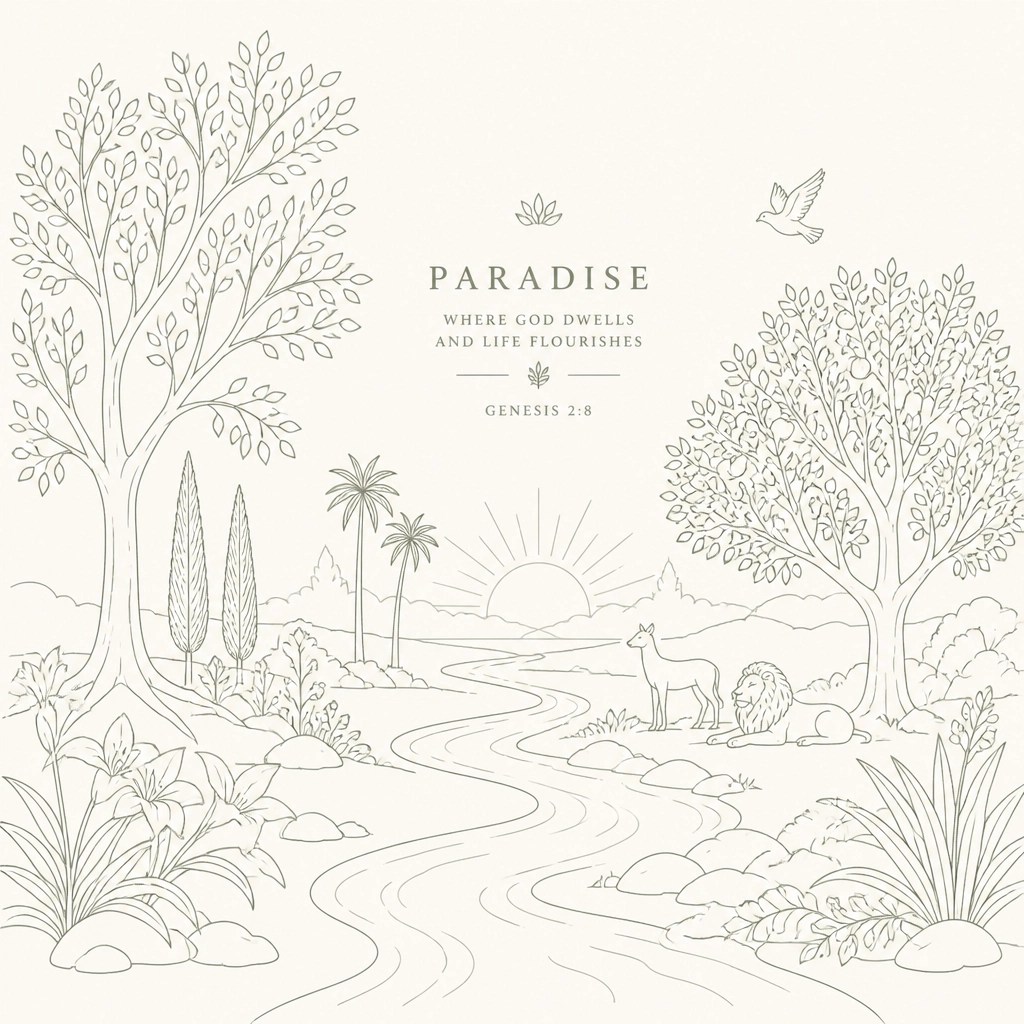
The word “Paradise” comes from the Greek word paradeisos, originally referring to a garden or royal park.
By the time of Jesus, Jewish thought commonly connected Paradise with:
- The dwelling place of the righteous dead
- Eden restored
- A place of blessing in God’s presence
This is important because Paradise here is not yet the final eternal state described in Revelation 21 and 22.
The Bible distinguishes between:
- The intermediate state after death
- The future bodily resurrection
- The eternal new creation
The thief enters blessed fellowship with Christ immediately after death, but the final resurrection still lies ahead.
That distinction matters because Christianity does not teach that eternity is merely floating around as disembodied spirits.
The biblical hope is resurrection:
real bodies, restored creation, heaven and earth united.
6. The Eden Connection
This is where insights emphasized by scholars like Michael S. Heiser become especially helpful.
Eden was sacred space:
the place where God dwelled with humanity.
Paradise imagery points backward to Eden and forward to the New Creation.
The thief is not simply “going to heaven.”
He is being restored to the presence of God.
That is one of the great themes of the Bible:
- Eden lost
- Humanity exiled
- Sacred space restricted
- The temple established
- The Messiah arrives
- Access restored through sacrifice
- New Creation coming
This is why the tearing of the temple veil immediately after Jesus’ death is so significant.
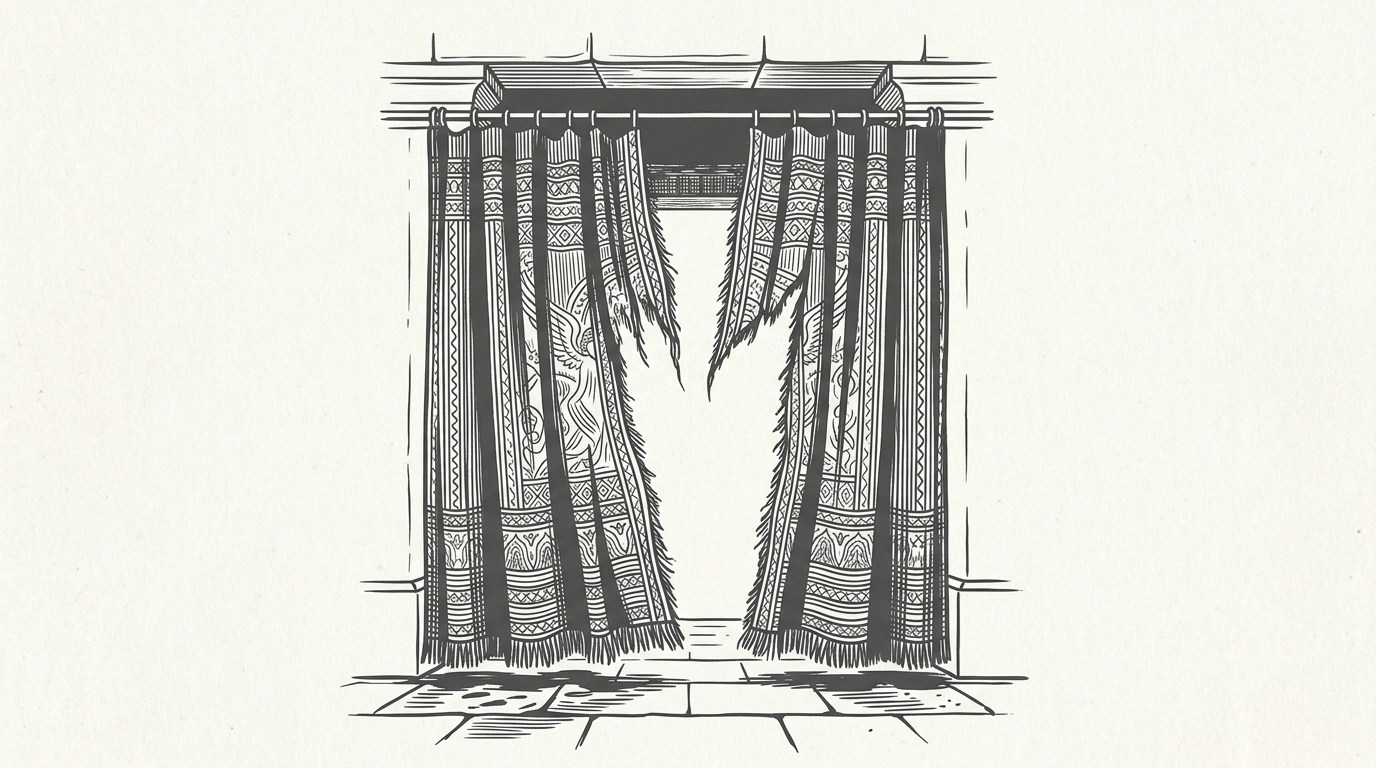
Through Christ, access to God is reopened.
7. Salvation by Grace Through Faith
The thief on the cross becomes one of Scripture’s clearest case studies in salvation.
He proves that salvation is not earned through religious performance.
That does not mean obedience and good works are unimportant. Scripture is clear that genuine faith produces transformation.
But works are evidence of salvation, not the cause of it.
The thief had no opportunity to demonstrate long-term obedience, yet Jesus fully saves him.
That dismantles every form of:
- Legalism
- Merit theology
- Self-salvation
- Religious scorekeeping
At the same time, this passage should not be abused.
Some people assume:
“I can always repent later.”
That is a dangerous conclusion.
The thief did not know he would have another hour to live, much less another decade.
None of us are guaranteed tomorrow.
Also notice:
- One thief repented
- One thief hardened himself
Both were equally close to Jesus physically.
Only one surrendered spiritually.
8. The Kingdom Is Already Breaking In
The thief asks for future remembrance in Christ’s kingdom.
Jesus gives him immediate presence.
That is profound.
The kingdom is both:
- Future
- Already breaking into the present
Even while hanging on the cross, Jesus acts as reigning King.
The cross was not Christ’s defeat before eventual victory.
The cross itself was part of His enthronement.
This is one of the great ironies of the Gospel accounts:
the King reigns from a cross. We must look at how the cross functions as a cosmic throne.
9. The Heart of Salvation: “With Me”
Most modern people reduce salvation to:
“Where do I go after I die?”
But Jesus emphasizes something deeper:
“You will be with Me.”
That is the center of salvation.
Not merely escaping judgment.
Not merely surviving death.
Not merely entering paradise.
The ultimate goal is restored fellowship with Christ Himself.
Christianity is fundamentally relational before it is geographical.
Final Thoughts
The thief on the cross had:
- No résumé
- No achievements
- No religious credentials
- No future opportunity to impress anyone
All he had was faith in the crucified King.
And Jesus declared him eternally secure.
That moment reminds us of several truths we desperately need to remember:
- You cannot save yourself
- Religious activity cannot replace surrender
- Jesus has authority over life, death, and eternity
- Genuine faith trusts Christ even when circumstances look hopeless
- Grace is bigger than human failure
The thief asked merely to be remembered.
Jesus gave him paradise.

Leave a Reply