We have a tendency to treat the Bible like a software update. We look at the Old Testament as "Beta 1.0": clunky, localized, and eventually superseded by the sleek, universal "Church 2.0" of the New Testament. In this "tame" modern paradigm, the ethnic people of Israel are often viewed as a temporary scaffolding, useful for erecting the structure of the Church but destined to be discarded once the roof is on.
But I believe that if we look closely at the "wild" reality of the text,[1] we find a God who isn't interested in planned obsolescence.
The question of whether the Church has replaced Israel isn't just a dry academic debate for seminarians; it strikes at the very heart of God’s character. If God can walk back a "forever" promise made to Abraham, what's to stop Him from walking back a promise made to you? To explore this, we have to dismantle some common silos and look at the cosmic narrative of a God who keeps His word to a specific, dusty piece of land and a specific, stubborn group of people.
1. The Myth of the Spiritual Upgrade
There is a popular interpretive horizon called supersessionism, or replacement theology.[2] It’s the idea that because Israel rejected their Messiah, God rejected Israel and transferred all their blessings (but curiously, none of their curses) to the Church. In this view, "Israel" becomes a mere metaphor for "the people of God."
I believe this is a fundamental category error.
When we read the Bible, we have to resist the urge to "spiritualize" away the physical realities of the text. When God spoke to the prophets, He didn't use "Israel" as a code word for "Gentiles in the 21st century." He was speaking to a nation with a specific geography and a specific genealogy. To suggest that the Church is the "New Israel" is to impose an anthropocentric filter on the Word. We want the Bible to be all about us, so we hijack the title deeds of another people.
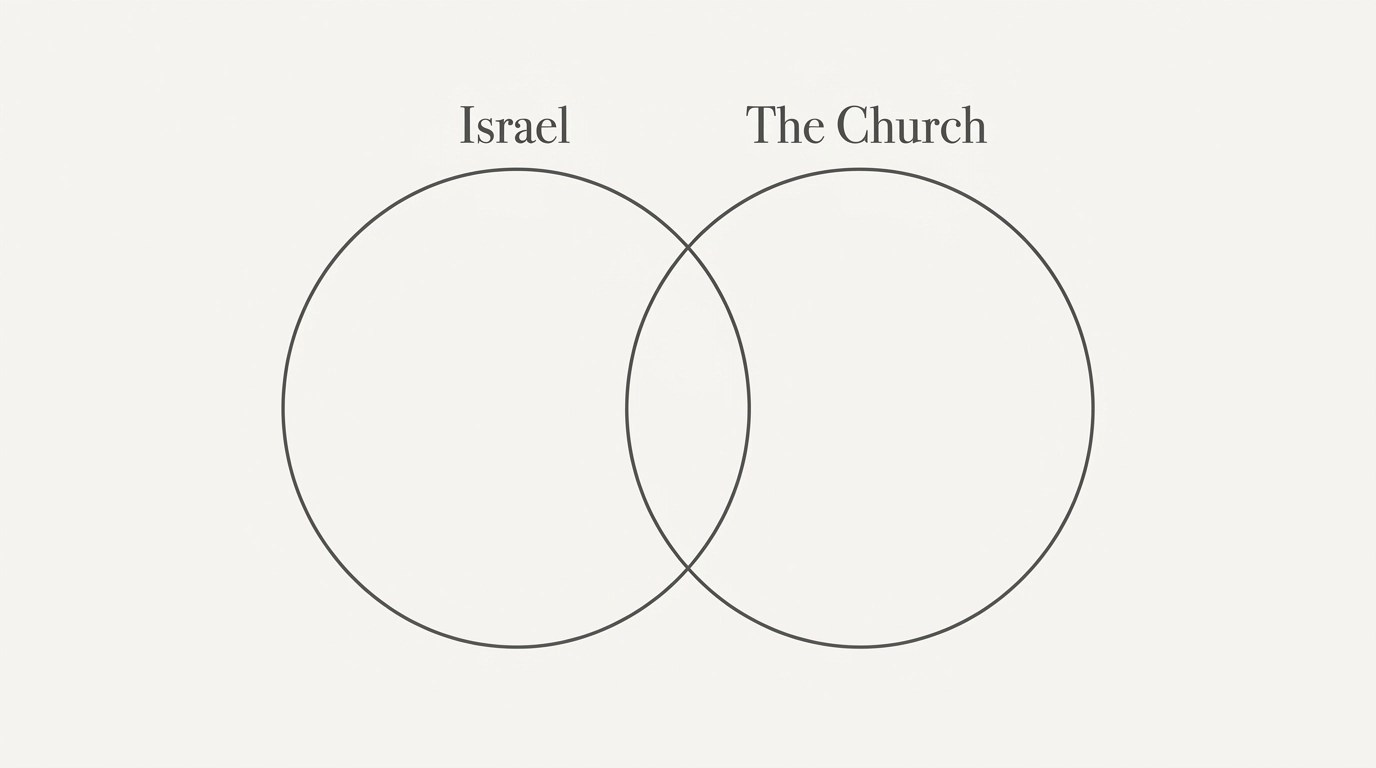
Thesis: The Church is a new creation, but it is not a new Israel. They are distinct entities with overlapping circles in the Venn diagram of God’s redemptive plan.
2. The Weight of Unconditional Covenants
To understand why Israel still matters, we have to look at the nature of the covenants. Most of us are used to "if/then" contracts. If you pay your mortgage, you keep the house. If you don't, the bank takes it. We assume God operates the same way: "If Israel stays faithful, they get the land. They didn't, so they lost it."
But the Abrahamic Covenant (Genesis 12, 15, 17) wasn't a standard contract. It was a unilateral promise. In Genesis 15, God alone passed through the severed animals while Abraham slept. God took the entire weight of the promise onto His own shoulders. He bound His own reputation to the preservation of Abraham’s physical descendants and their possession of the land.
The New Covenant, which we often claim as exclusively "ours," was actually promised to the "house of Israel and the house of Judah" (Jeremiah 31:31). I believe that as the Church, we are beneficiaries of this covenant: we get to drink from the well: but we didn't dig the well, and we don't own the property it sits on.
As Paul writes in Romans 11:29 (ESV): "For the gifts and the calling of God are irrevocable."[3]
God doesn't do "take-backs." If the "forever" of the Old Testament has an expiration date, then the "eternal life" of the New Testament is on shaky ground.
3. Romans 11 and the Mechanics of Grace
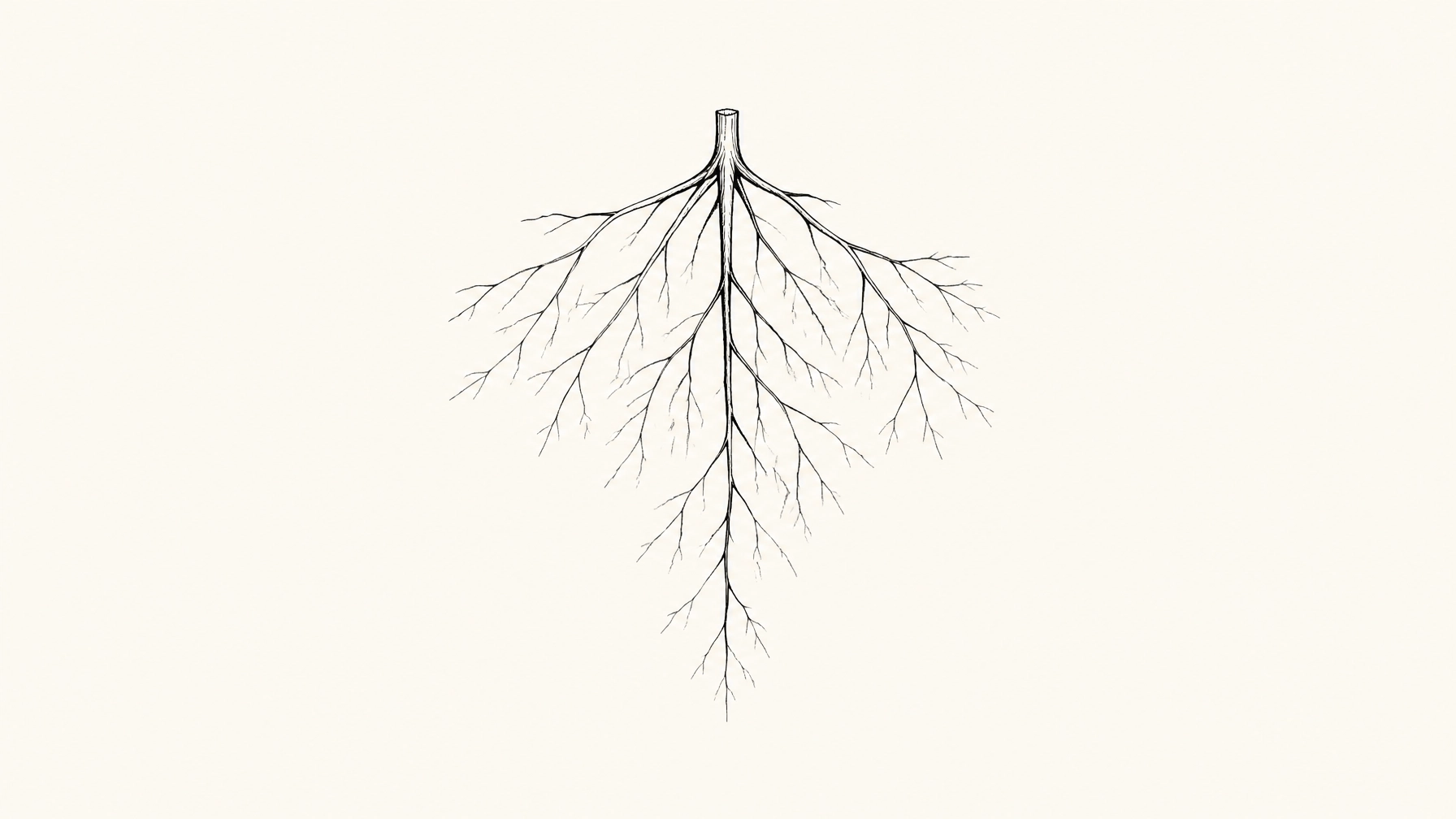
We often treat Romans 9–11 as a parenthetical detour in Paul’s letter, but it’s actually the climax of his argument about the faithfulness of God. Paul uses the metaphor of an olive tree to explain how we all fit together.

In this "wild" metaphor, the tree represents the place of blessing and covenant. The natural branches are Israel. Because of unbelief, some of those branches were broken off, and we: the "wild olive shoots": were grafted in among them.
Notice two things about this:
- The Root is Jewish: We do not support the root; the root supports us. We are guests at a table that was set for someone else.
- The Grafting is Temporary: Paul warns us not to become "haughty" toward the natural branches. If God could graft in a wild branch, how much easier will it be for Him to graft the natural branches back into their own tree?
I believe that many in the modern Church have fallen into the trap of legalistic thinking: believing that our "inclusion" means their "exclusion." But the narrative is systemic and cosmic. Israel’s present "hardening" is described as partial and temporary, designed to allow the "fullness of the Gentiles" to come in. Once that task is complete, the focus shifts back.
"Sin is an infection, not just an error. And God’s cure for the world involves the restoration of the original patient: Israel."[4]
4. Life from the Dead: The Future Restoration
So, what does the future look like? If the Church hasn't replaced Israel, what are we waiting for?
I believe we are waiting for the fulfillment of Romans 11:26 (ESV): "And in this way all Israel will be saved."[5]
This isn't some vague spiritual metaphor. It points to a literal, national turning of the Jewish people to their Messiah, Yeshua. When this happens, Paul says it will be nothing less than "life from the dead" (Romans 11:15). It is the catalyst for the final restoration of all things.
We see this tension in our world today. The very existence of the nation of Israel and the Jewish people after two millennia of exile and persecution is an "intellectual air" that the world tries to ignore. It is a "literary leper": a fact that doesn't fit into the "tame" secular or replacement theology paradigms.

5. A Text-First Approach
When we approach the Bible, we have a choice. We can bring our pre-packaged systems and force the text to fit our charts, or we can let the text speak for itself. This is what I call a "Text-First" method.
When the Bible says "Israel," let’s assume it means Israel. When it says "Church," let's assume it means the Church. When we do this, the Bible gets "weird" again: it stops being a manual for personal self-help and starts being a cosmic drama involving nations, angels, and ancient promises. (For more on why this matters, check out my post on Why the Bible Needs to Get Weird Again).
I believe the distinction between Israel and the Church is vital because it protects the integrity of God’s Word. If we can "interpretive horizon" our way out of the physical promises to Israel, we can interpret our way out of anything.
Final Thoughts
We are part of a shared journey. We are the wild branches, grafted into a story that began long before we arrived and will conclude with a faithfulness that exceeds our imagination.
The Church is not the "New Israel." We are the "Fellow Heirs." We are the "Grafted-In." We are the witnesses to a God who is so faithful to His first people that it gives us absolute confidence that He will be faithful to us, too.
If you’re interested in diving deeper into these kinds of biblical studies, I encourage you to stop looking for the "tame" answers and start embracing the "wild" reality of the text.
The future isn't about us replacing them. It's about a faithful God bringing the whole family home.
References
[1] Michael S. Heiser, The Unseen Realm: Recovering the Supernatural Worldview of the Bible (Bellingham, WA: Lexham Press, 2015).
[2] Michael J. Svigel, Retro-Christianity: Reclaiming the Essential Elements of the Christian Faith (Wheaton, IL: Crossway, 2012).
[3] The Holy Bible, English Standard Version (Wheaton, IL: Crossway Bibles, 2016).
[4] Based on the "Three Falls" theology developed by Michael S. Heiser.
[5] English Standard Version (ESV) Bible.


Leave a Reply