
If you had asked me years ago what happens to Christians after they die, I would have answered without hesitation:
"We go to heaven."
That's true.
But it's not the whole story.
In fact, I think many of us have unintentionally shortened the biblical story. We've turned heaven into the destination when the Bible presents it as an important stop along the way.
That realization changed the way I read Scripture.
The Story I Grew Up Hearing
The version I absorbed went something like this:
We live on earth.
We die.
We go to heaven.
We stay there forever.
Simple.
Comforting.
And incomplete.
The more I studied the Bible from Genesis to Revelation, the more I realized that the Christian hope is much bigger than "going to heaven."
Yes, Believers Go to Be with Christ
Let's start with what Scripture clearly teaches.
Paul says that to depart and be with Christ is "far better" (Philippians 1:23). He also says that to be absent from the body is to be at home with the Lord (2 Corinthians 5:8).
I believe that.
When a Christian dies, he or she is with Christ. That is wonderful news.
But notice something.
Neither passage says that this is the final state of God's people.
The Bible keeps telling the story.
The Christian Hope Is Resurrection
From the very beginning, God's plan was never for humanity to exist forever as disembodied spirits.
God created human beings with bodies and placed them in a real world that He repeatedly called "good."
Sin brought death.
Death is not our friend. It is an enemy (1 Corinthians 15:26).
God's answer is not to make death permanent.
His answer is resurrection.
That's why the resurrection of Jesus matters so much. It wasn't simply proof that He conquered death. It was the firstfruits of what is coming for everyone who belongs to Him.
The Christian hope has always been resurrection.
Not escape.
The Bible Ends Where It Began
One of the biggest surprises for me was realizing that the Bible ends much like it begins.
Genesis opens in a garden where God dwells with humanity.
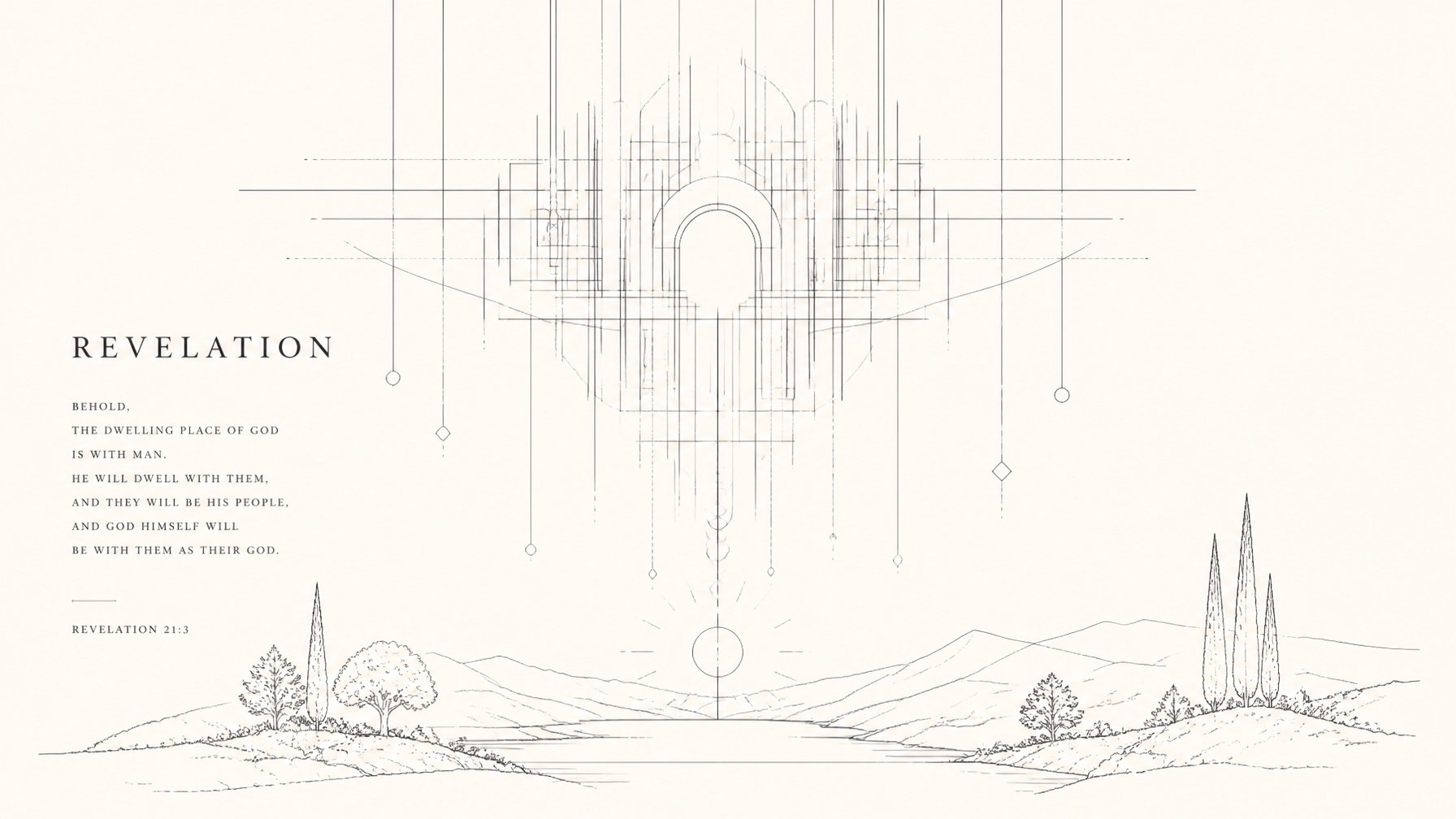
Revelation ends with God dwelling with humanity again.
But notice what happens in Revelation 21.
John does not see believers leaving earth to live forever in heaven.
He sees the New Jerusalem coming down out of heaven.
God's dwelling comes to mankind.
Heaven and earth are united.
Creation is restored.
Death is gone.
The curse is removed.
The story doesn't end with us escaping creation.
It ends with God restoring creation.
This Has Been God's Plan All Along
Once I saw this, I started noticing it everywhere.
Isaiah speaks of a new heavens and a new earth.
Ezekiel looks forward to God dwelling among His people forever.
Paul says that creation itself longs to be set free from its bondage to corruption (Romans 8).
Peter looks forward to a new heavens and a new earth where righteousness dwells.
The final chapters of Revelation bring all of these promises together.
The Bible isn't telling disconnected stories.
It's telling one story.
Why This Matters
This isn't just a theological detail.
It changes how we see God's mission.
Sometimes we talk as if God is rescuing people from the earth.
The Bible presents something even better.
God is redeeming everything sin has broken.
That includes people.
That includes creation.
That includes the nations.
That includes the earth itself.
The goal has never been to abandon creation.
The goal has always been to restore it.
The Bigger Hope
Today, if someone asks me what happens when a Christian dies, my answer is a little longer.
Yes, believers who die are with Christ.
But that isn't the end of the story.
Jesus is coming back.
The dead will be raised.
Our bodies will be made new.
Creation will be restored.
God will dwell with His people forever.
The Bible's final hope is not that we spend eternity in heaven.
It is that heaven and earth become one under the reign of King Jesus.
I used to think heaven was the finish line.
Now I see it as a glorious chapter in a much greater story.
And honestly?
I think the ending God has planned is even better than the one I grew up imagining.

Leave a Reply