
For as long as many of us can remember, the mental architecture of eternity has been furnished by a single, resonant line: “In my Father's house are many mansions.”
We grow up imagining a celestial suburbia: endless rows of custom-built estates, gleaming marble porches, and sprawling celestial real estate awarded according to our spiritual productivity. If you ran the race well, maybe you get the hilltop view; if you stumbled along the back roads of faith, perhaps you settle for a modest cottage by the Jasper sea. We take this inherited assumption and project our modern obsession with luxury, square footage, and personal achievement straight into the age to come.
Yet, when we return to the text that birthed this image, we discover something startling. The word "mansions" is entirely absent from the Greek New Testament.
1. The Lost Lexicon of Monē
Unpacking the Greek text behind the familiar phrase
The word Jesus actually used in John 14:2 is monē (plural: monai). If you trace this term through classical and biblical Greek, you will find no reference to opulent palaces, multi-car garages, or private country clubs.
Thesis: Monē does not describe an architectural monument of wealth; it denotes a place of remaining, an abiding room, or a temporary lodging where a traveler stays.
Formed directly from the verb meno: which means to remain, stay, abide, or dwell: monē speaks fundamentally to presence rather than property. In John's Gospel, meno is the theological heartbeat of discipleship. From the very first disciples asking Jesus where He is staying (John 1:38) to the metaphor of the vine and the branches in John 15, staying put with God is the essence of the faithful life.
When Jesus speaks of monai in the Father's house, He is not handing out real estate deeds. He is assuring terrified, fragile disciples that there is a permanent place for them to stay within the life of God.
2. From Roadside Inns to Royal Estates
How a 4th-century translation shifted our eternal imagination
How did a word meaning "room" or "resting place" morph into sprawling mansions? The detour runs through history, language, and the inevitable drift of human culture.
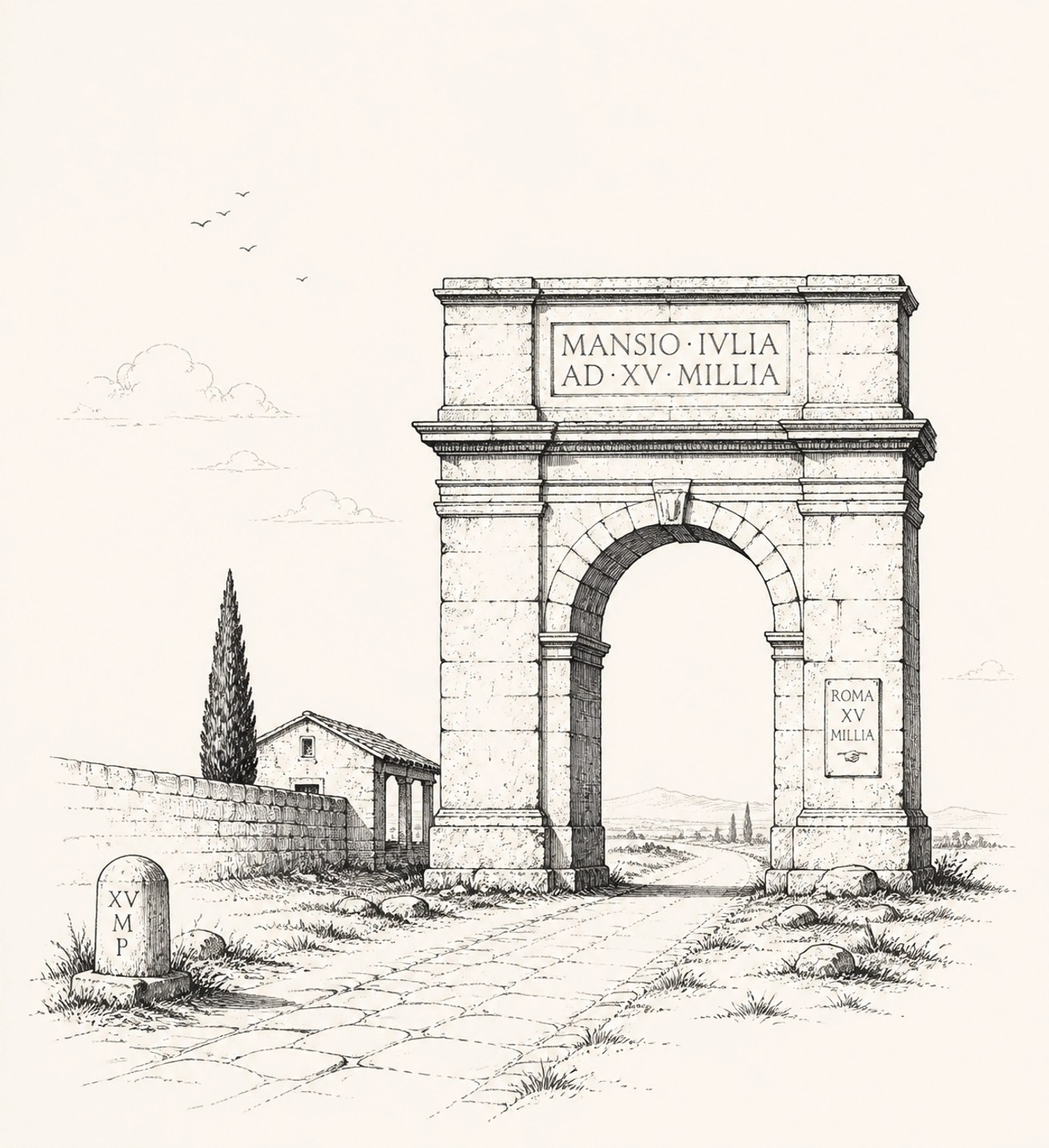
In the late 4th century, Jerome translated the Greek New Testament into the Latin Vulgate, rendering monai as mansiones. In the Roman world, a mansio was an official roadside way station or inn along the imperial highways where travelers stopped to rest, change horses, and sleep. It was intensely functional, utilitarian, and accessible to weary pilgrims.
When the King James translators sat down in 1611, they translated Jerome’s mansiones as "mansions." But in 17th-century English, a "mansion" simply meant an abode, a dwelling place, or a room: it carried no inherent connotation of opulence or elite luxury. Over the next four hundred years, however, the English language drifted. "Mansion" became synonymous with wealth and exclusivity.
We took a word meant to comfort the weary traveler on a dusty road and turned it into an exclusive trophy home.
3. The Shadow of John 13
Reading Jesus's promise against the backdrop of panic
To understand why Jesus spoke these words, we have to inhabit the stifling atmosphere of John 13. This is not a serene theological seminar delivered from an ivory tower. It is the final, agonizing night before the crucifixion.
Jesus has just washed dirty feet, identified a traitor in their midst, announced His imminent departure, and predicted that Peter, their vocal leader, would deny Him three times before dawn. Panic, abandonment, and profound disorientation ripple through the room. The disciples are staring into an abyss. They are about to lose their teacher, their protector, and their entire worldview.

When Jesus says, "Do not let your hearts be troubled… In my Father's house are many dwelling places," He is offering a lifeline, not a real estate portfolio. He is answering their unspoken terror: Is there still a place for us now that we have failed? Will we be locked out because we couldn't measure up?
Jesus reassures them that the Father's house has plenty of room. The door is wide open, not because of their impeccable spiritual performance, but because of His relentless grace.
4. Mutual Indwelling: The Present Reality of Monē
Connecting John 14:2 to John 14:23
If we miss the linguistic connection between the beginning and the end of John 14, we miss the entire point of what God is building.
Look at what Jesus says later in verse 23: "If anyone loves me, he will keep my word, and my Father will love him, and we will come to him and make our monē with him."
Here is the breathtaking reversal: In verse 2, we go to find a resting place in the Father's house; in verse 23, the Father and the Son come to make their resting place inside the believer.
Thesis: The architecture of the Father's house is defined not by physical square footage, but by mutual indwelling through the Spirit.
This transforms our view of eternity from a distant, deferred reward into a present, living reality. The dwelling place is inaugurated here and now by the Holy Spirit. We do not have to wait until we die to experience the security of God's presence; we are invited into an ongoing, breathing relationship where God makes His home in us.
The Danger of Transactional Faith
When we read John 14 through the lens of modern "mansions," we inadvertently reshape the gospel into a transaction. We begin to view faith as currency and grace as a merit badge system, where our spiritual hustle determines our eternal upgrade.
This transactional mindset crushes the fragile and feeds the pride of the triumphant. But Jesus did not speak these promises to spiritual titans; He spoke them to terrified, confused disciples on the brink of collapse.
The promise of monē reminds us that we are known, welcomed, and kept by God: not because we earned the square footage, but because we belong to the family. The ultimate reward of the Christian life is never the room itself; it is the presence of the One who dwells there with us.
Acknowledgment: Thanks to the YouTube channel The Original Meaning for inspiring this deeper dive into the word study behind John 14.
Footnotes & Scholarly References
- BDAG (A Greek-English Lexicon of the New Testament and Other Early Christian Literature): Defines monē (μονή) as a dwelling, abode, room, or place where one stays.
- Raymond E. Brown, The Gospel According to John (Anchor Yale Bible): Notes the structural and theological continuity between menō (abiding) and monē (dwelling place) within the Johannine farewell discourse.
- C.H. Dodd, The Interpretation of Fourth Gospel: Explores the profound emphasis on relational union and mutual indwelling in John 14.
- The Latin Vulgate (Jerome, c. 400 AD): Translates monai as mansiones, reflecting the ancient Roman concept of the roadside resting station (mansio).
Leave a Reply