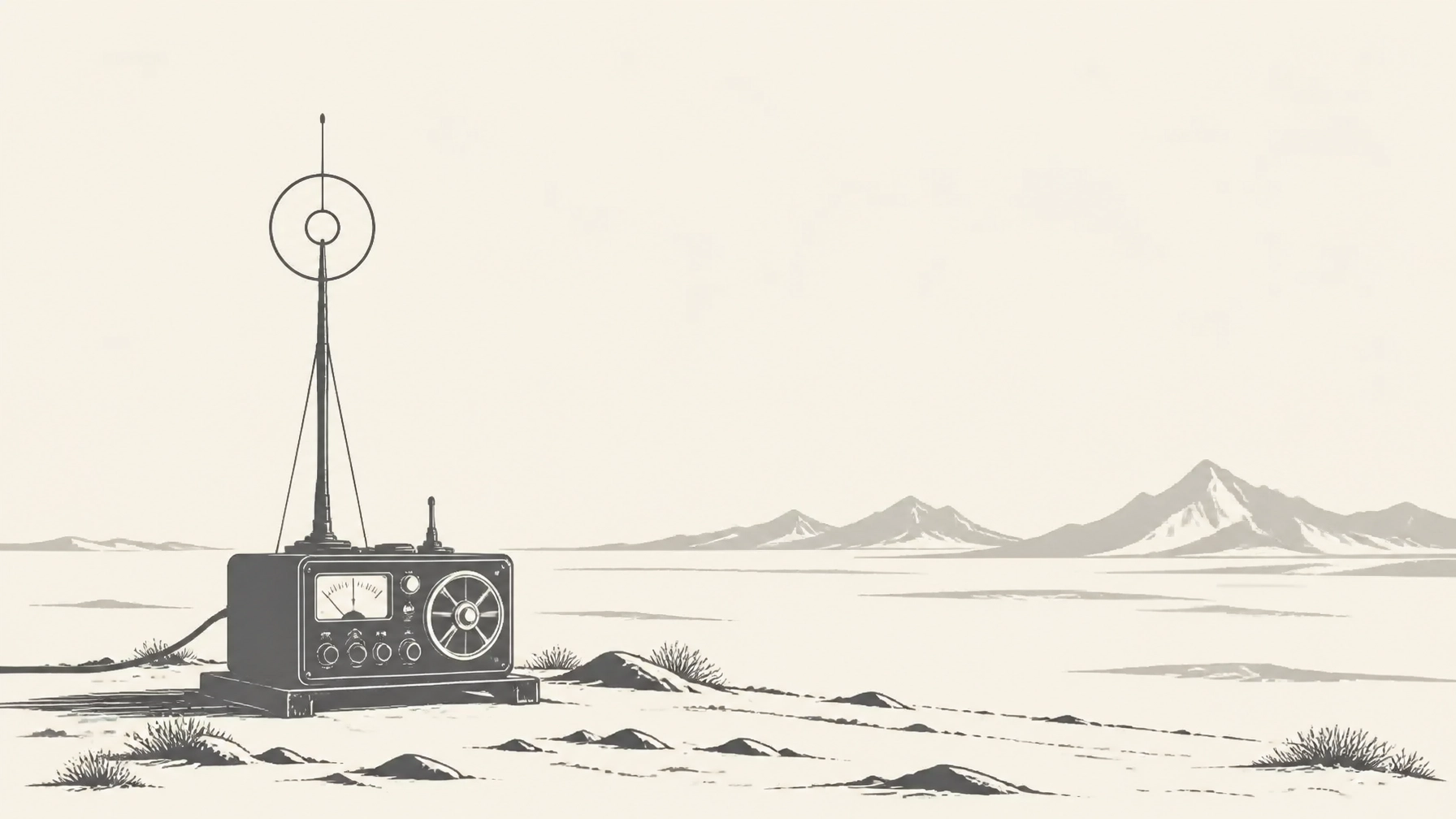
We often treat the world as a playground or a classroom, but we rarely treat it as a battlefield. In our modern, sterilized version of spirituality, we are taught to see every tragedy as a "teachable moment" or a hidden blessing. We have been conditioned to believe that if we just have enough faith, the jagged edges of life will somehow smooth out into a comfortable, linear narrative of personal growth. But this tame assumption fails to account for the weird and wild reality presented in the scriptures. The biblical writers did not view the world as a neutral space where God and humans occasionally bump into each other. Instead, they operated within a paradigm that saw the earth as enemy-occupied territory.
When we adopt a biblical perspective, the "already but not yet" nature of the kingdom takes on a gritty, wartime quality. We are not just waiting for a change in scenery. We are living behind enemy lines, waiting for a liberation that has been promised but not yet fully executed. In this interpretive horizon, the act of lament is not a sign of spiritual surrender. It is quite the opposite. Lament is the radio signal of the Resistance. It is the proof that we have not yet assimilated into the dark system that currently holds sway over this age.
1. The Architecture of Occupation
Living in the shadow of the Three Rebellions
To understand why we groan, we must first understand where we are. The "world" described in the New Testament is not a passive backdrop for our individual salvation stories. It is a complex, systemic structure that 1 John 5:19 says "lies in the power of the evil one" (ESV). This is the "occupied territory" that C.S. Lewis famously described in Mere Christianity. He noted that Christianity is the story of how the rightful King has landed, you might say landed in disguise, and is calling us all to take part in a great campaign of sabotage.
This isn't just poetic language. It is a cosmic reality rooted in what we call The Three Rebellions and Cosmic War. From the initial fall in Eden to the corruption of the Watchers in Genesis 6 and the subsequent division of the nations at Babel, the earth has been handed over to hostile powers. These are the "rulers," the "authorities," and the "cosmic powers over this present darkness" mentioned in Ephesians 6:12 (ESV).
When we view the world through this lens, we realize that the suffering we see – the injustice, the cancer, the shattering of relationships – is not "God's mysterious plan" in a vacuum.
It is the result of an illegal occupation. We are living in a world that is currently being governed by usurpers who have no intention of going quietly. This realization shifts our entire approach to faith. If the world is occupied, then our primary job is not to be happy. Our job is to be the Resistance.
2. The Anatomy of the Signal
Why "How Long?" is a technical requirement
If we are the Resistance, then our prayers are our communications back to Headquarters. Most modern prayer focuses on asking for better conditions within the occupation. We ask for better jobs, better health, and better moods. While these are not wrong, they often lack the "cosmic" weight of biblical prayer. The most frequent form of prayer in the Bible – lament – looks very different.
Consider the "How long?" of Psalm 13.
"How long, O LORD? Will you forget me forever? How long will you hide your face from me?" (Psalm 13:1, ESV).
In a world that is "fine," this sounds like complaining. But in an occupied territory, this is a technical signal. It is an acknowledgment that the current situation is unacceptable and that the promised relief is overdue. When we cry out in lament, we are essentially sending a burst of static through the airwaves of the "prince of the power of the air" (Ephesians 2:2, ESV). We are asserting that the current darkness is not the final word.
Lament is the refusal to normalize the abnormal.
We often think that lament is a lack of faith, but it is actually the highest form of faith. It is the stubborn refusal to believe that this broken world is what God intended. It is the interpretive horizon where our current pain meets the future promise. When we refuse to sugarcoat our suffering, we are making a theological statement. We are saying that the King's return is the only answer that matters.
3. Faith as Cosmic Friction
The danger of spiritual assimilation
One of the most dangerous things a believer can do is to become too comfortable in the present age. We have spoken before about the most dangerous assumptions a believer can make, and perhaps the biggest is the idea that we can be at peace with a world that is at war with our King.
The occupation wants us to assimilate. It wants us to develop a "tame" spirituality that manages our symptoms while ignoring the disease. It wants us to turn our churches into social clubs and our worship into entertainment. But lament creates friction. It keeps us from settling.
When we lament, we are practicing a form of "holy discontent." We are acknowledging that we are "sojourners and exiles" (1 Peter 2:11, ESV). If you are an exile, you don't build a permanent mansion in the land of your captivity. You keep your bags packed. You keep your ears tuned to the radio. Lament is the sound of a heart that is still packed for the journey home.
By modeling lament in our public prayers and teaching, we are training our communities to resist the pull of assimilation. We are reminding each other that we do not belong here. This world, in its current state, is not our home. We are waiting for the "redemption of our bodies" and the "revealing of the sons of God" (Romans 8:19, 23, ESV).

4. The Futurist Hope
The certainty of the King's return
The only reason the Resistance continues is that the soldiers know the King is coming back. In a Premillennial framework, this return is not a metaphor. It is a physical, historical, and cosmic event. Christ will return to dispossess the "sons of God" who have corrupted the nations and to establish a literal kingdom where "he will wipe away every tear from their eyes" (Revelation 21:4, ESV).
This future reality is what gives our present lament its power. We are not just crying into a void. We are crying out to a King who has already landed His initial forces – the Holy Spirit and the Church – and who is currently mobilizing for the final assault. Our "How long?" is inextricably linked to His "I am coming soon."
This is the missing piece in many of our conversations about suffering. We try to find "meaning" in the pain itself, but the meaning is found in the resolution of the pain. The "answer" to suffering isn't a clever philosophical argument. The answer is a person. The answer is the Return.
Until then, we groan. We groan along with the "whole creation" which has been "groaning together in the pains of childbirth until now" (Romans 8:22, ESV). This groaning is not the sound of death. It is the sound of something new trying to be born. It is the sound of the Resistance waiting for the dawn.
5. Practical Resistance in the Sunday Pew
How to signal from the trenches
So how do we practically "model lament" in a culture that demands constant positivity? It starts by acknowledging that our public gatherings are not just for celebration. They are for re-orientation.
We can stop treating our prayers as a grocery list of requests and start treating them as an appeal to the Supreme Judge. We can bring the "weirdness" of the biblical worldview back into our conversations, acknowledging that the spiritual forces of evil are real and that their influence is felt in our broken bodies and hearts. We can find the "gritty songs" that speak to the darkness without pretending it doesn't exist.
When we do this, we provide a space for those who are suffering to breathe. We tell them that they don't have to "fake it" to be faithful. We remind them that their tears are not a failure of faith, but a signal that they still belong to the true King.
You are not crazy for feeling like this world is not right. You are not weak for crying out in the dark. You are simply a member of the Resistance, sending your signal back to Headquarters. And the message coming back through the static is clear.
The King is coming. Hold the line.

Leave a Reply