
I’ve been thinking a lot about how we handle pain in the church. Most of the time, we try to fix it, ignore it, or explain it away with a quick Bible verse. But what if our tears aren't a problem to be solved? What if they're actually part of our job description?
This is part one of a two-part series on the 'holy grit' of lament. We’re moving past the idea that groaning is a sign of weak faith and realizing it’s actually a royal protest. It starts with understanding who we are in the middle of a broken world: we aren't just survivors; we're priests.
1. The Vocation of the Gap
A priest stands in the middle. That is the job. A priest faces God and faces a wounded world, and refuses to pretend the distance between them is normal.
That means lament is not a private emotional spillover. It is priestly work. We are not just isolated individuals trying to survive a rough week with decent coffee and a Bible verse taped to the fridge. We are people called to carry the ache of the world into the presence of God.
This is the part our modern habits tend to flatten. We reduce faith to personal quiet time, personal morality, personal coping strategies. The biblical world is bigger and stranger than that. Israel had priests because the world was fractured and someone had to stand in the breach. In Christ, that vocation does not vanish. It expands. The church becomes a royal priesthood, which means we are summoned into the gap rather than excused from it.
So when the world cracks open and you feel the pressure of grief, injustice, decay, and futility, that is not always a sign that something has gone wrong in your spiritual life. Sometimes it is a sign that you are awake. Sometimes it is the weight of your office.
Lament is what priesthood sounds like in a world that is still bleeding.
2. The Spirit as our Co-Groaner
Romans 8 refuses to let us imagine the Christian life as polished, painless, and emotionally well managed. Paul says creation groans. We groan. And then, with stunning tenderness, he says the Spirit groans too. The Holy Spirit intercedes for us with wordless groans.
That line should slow us down. The Spirit is not standing at a safe distance, clipboard in hand, grading our composure. The Spirit enters the sorrow. The Spirit joins the ache. The Spirit takes up residence in the fracture and prays from inside it.
So when we lament, we are not performing spiritual failure. We are participating in the life of the Spirit. Our groaning is not a glitch in the system. It is one of the signs that the Kingdom has invaded enemy territory and the battle is still underway.
This is why Christian lament has dignity. It is not dramatic pessimism dressed up in church clothes. It is shared vocation. The Spirit does not merely tolerate our sighs. He carries them. He translates them. He turns the cries we can barely form into prayer that reaches the throne of God without losing any of its weight.
That means lament is not the opposite of hope. It is hope with dirt under its nails.
3. A Royal Protest for a Broken World
The biblical story does not present evil as a minor inconvenience in an otherwise tidy system. It presents a cosmos in revolt. The rebellions in Eden, in Genesis 6, and at Babel are not random episodes. They are ruptures that leave the nations disordered and the world subject to hostile powers. We are living in occupied territory.
That framework changes the meaning of lament. If the world is occupied by sin and death, then lament is not mere sadness. It is official protest. It is the speech of a royal priesthood refusing to baptize the current mess as normal.
We lament because we know who the true King is. We know the world belongs to Him even when it looks like vandals have been left alone with the keys. Our prayers become an act of public resistance. We name what is broken. We grieve what has been desecrated. We refuse the tame lie that evil is just the way things are.
In that sense, lament is deeply political, though not in the stale partisan way people usually mean. It is priestly protest on behalf of the coming King. It is how we represent His interests in a world that has forgotten Him and then congratulated itself for doing so.
Lament is a royal protest against the illegal occupation of creation by sin and death.
4. Modeling Lament in the Gathering
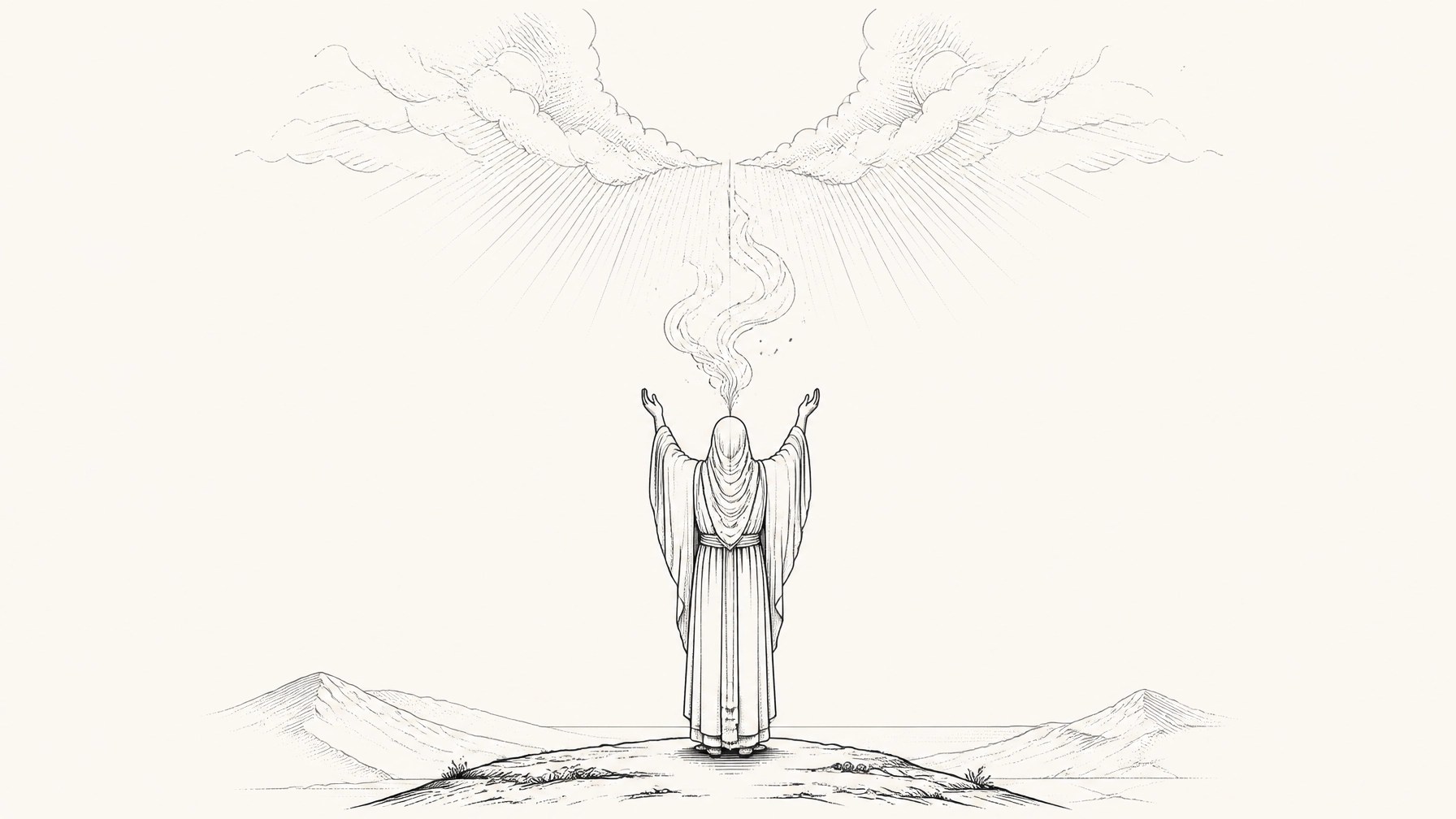
If lament is a priestly office, then our public prayers should reflect that. We shouldn't be afraid to bring "gritty" songs or prayers into our Sunday mornings. It’s hard to sing a lament when the culture is geared toward victory laps, but modeling it in prayer is a powerful way to begin.
When we pray for a world in pain, we aren't just "informing" God of the news. We are acting as priests of the groaning. We are giving the Spirit a space to articulate those "wordless" cries through our own voices. This is why the Bible needs to get weird again matters so much. When we recover the supernatural worldview, we realize that our prayers have a cosmic impact.
We are not just individuals trying to get through a hard week. We are part of a royal priesthood that stands at the intersection of the "already" and the "not yet." Our tears are the liturgy of the resistance.
Sin is an infection, not just a moral error. And lament is the immune response of the Body of Christ.
The Resistance of the "How Long?"
So, where do we go from here?
Next time you feel the weight of the world—the frustration of a body that is failing, the sorrow of a broken relationship, or the sheer "futility" of the news cycle—don't try to "pray it away" with a shallow platitude. Instead, recognize it as your call to duty.
You are a Priest of the Groaning. Your job is to stand in that gap and cry out, "How long, O Lord?" You aren't lacking faith; you are demonstrating it. You are showing that you know how the story is supposed to end, and you refuse to be satisfied with the current illegal occupation of this world.
Our lament is the secret radio signal of the Resistance. It is the proof that the King is coming.

Lament is the secret radio signal of the Resistance; it is the evidence that we know the King is coming.
We don't have to have all the answers yet. But we can have the courage to groan. Because when we groan, we are never groaning alone. The Spirit is right there with us, translating our sighs into the language of the Kingdom.
Leave a Reply