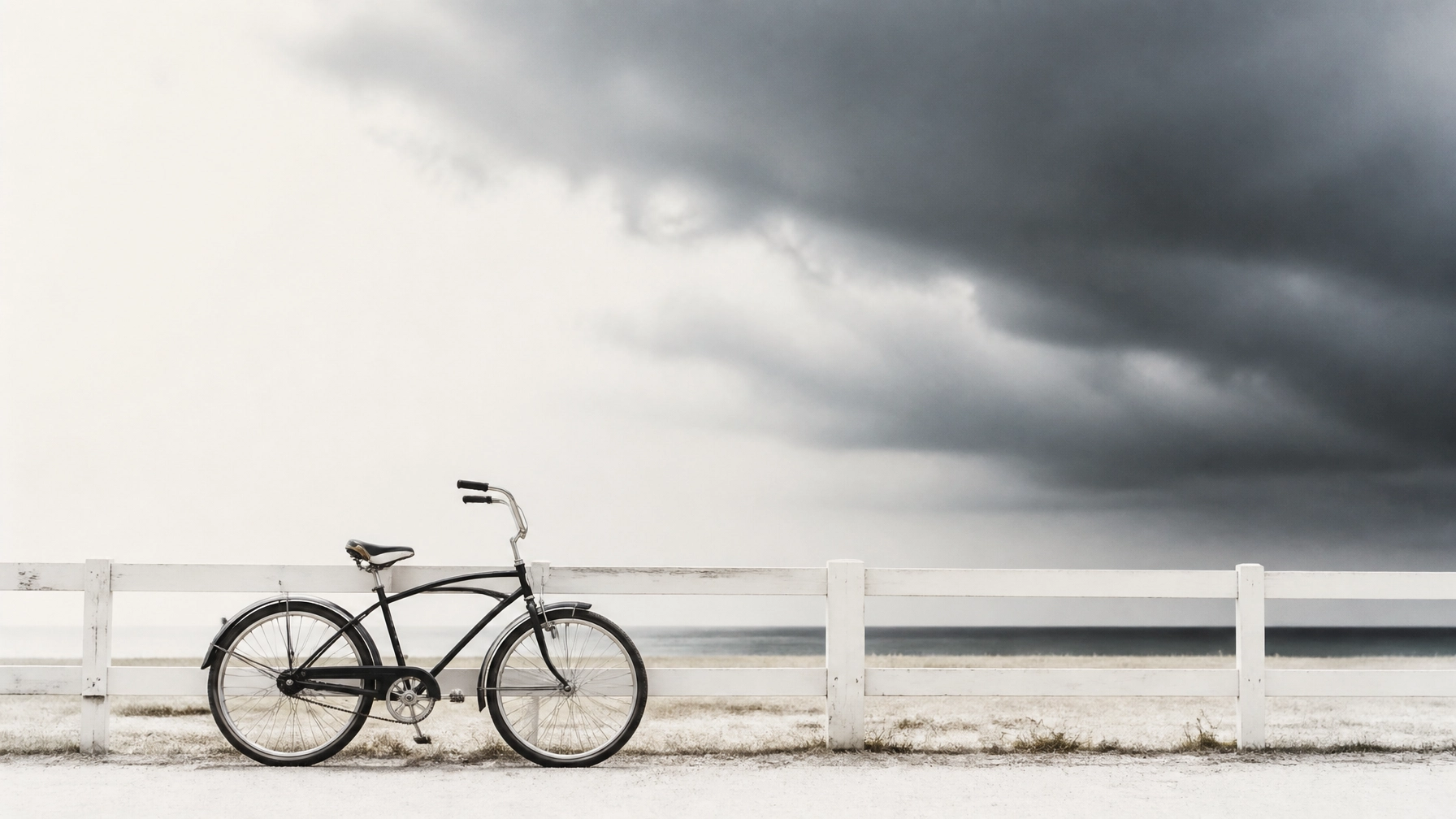
There are only a handful of childhood memories that remain crystal clear more than sixty years later. One of mine happened on a September afternoon in 1960, when I was eight years old and living just a block north of the Gulf of Mexico in Biloxi, Mississippi.
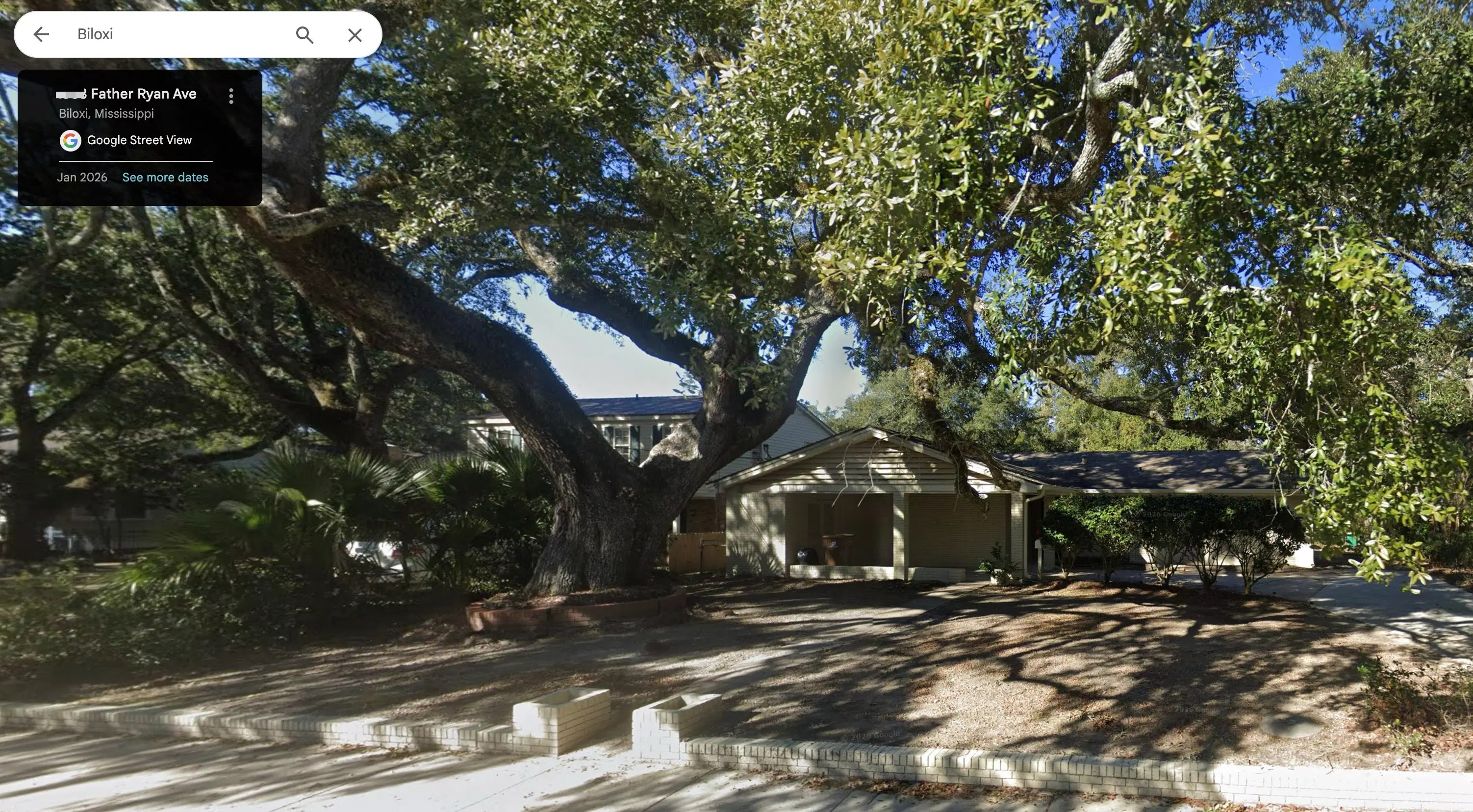
Our home stood on Father Ryan Avenue, under the shade of a magnificent, mature live oak tree.
For years, I could remember the event vividly, but I couldn’t remember the name of the storm or even the exact year. I guessed it had been sometime in the early 1960s.
Now I know.
It was Thursday, September 15, 1960.
That morning, everyone along the Mississippi Gulf Coast was talking about Hurricane Ethel. The local newspaper’s banner headline stretched across the front page:
“HURRICANE GOES INLAND.”
Another headline announced that Ethel had “marched ashore between Biloxi and Pascagoula.” Weather forecasters warned of high tides, heavy rain, and damaging winds as the storm crossed the coast.

There was one other thing I remember.
My Aunt Ethel.
Everyone thought it was funny that the hurricane shared her name. Sixty-six years later, that little family joke became one of the clues that helped me identify the storm.
As the morning wore on, the wind increased, the rain fell harder, and the Gulf became increasingly angry. Then something remarkable happened.
Everything stopped.
The rain quit.
The wind died.
The world became strangely quiet.
The eye of Hurricane Ethel had arrived.
I don’t remember feeling frightened.
I remember being fascinated.
Like most eight-year-old boys, curiosity outweighed caution.
I asked if I could ride my bicycle.
Today, no parent would likely say yes.
In 1960, things were different.
My mother simply told me to stay close to home.
So I rolled my bicycle out of the driveway and headed down what is now St. Jude Street. It had a different name then, but the route hasn’t changed. I only rode a few blocks toward Highway 90, just far enough that I could look toward the Gulf.
That was the whole point.
I wanted to experience the eye of a hurricane.

I stood there watching the water.
Then I noticed something.
The wind was beginning to return.
Not from the same direction.
From the opposite direction.
I didn’t know enough meteorology to explain it, but I knew enough to understand that the storm wasn’t over.
I turned around and rode home.
Only many years later did I understand what I had witnessed.
When the eye of a hurricane passes overhead, the winds often become calm for a brief time. Then, as the back side of the storm arrives, the wind reverses direction. What I remembered all those years wasn’t my imagination. It was one of the defining characteristics of an eye passage.
The Daily Herald reported that Hurricane Ethel crossed the Mississippi coast around noon, between Biloxi and Pascagoula. Looking back, I suspect I was riding during that brief midday calm as the eye passed over our neighborhood before the back side of the storm arrived.
The newspaper, the following day, described Biloxi cleaning up after what it called Ethel’s “breezy hug.” Damage was far less than expected. The storm had weakened rapidly before coming ashore, sparing the Mississippi Coast from the catastrophe many had feared.
That became one of the unintended lessons of the early 1960s.
Several storms had threatened the Gulf Coast but ultimately proved survivable. Families grew accustomed to riding out hurricanes. Confidence slowly replaced caution.
Nine years later, that confidence would have tragic consequences.
In August 1969, Hurricane Camille came ashore just west of Biloxi with unimaginable force. Many residents stayed because they had survived earlier storms. Some gathered at the Richelieu Apartments in Pass Christian for what became known as the infamous “hurricane party.” Most of them never made it out alive.
Our family made a different decision.
My father managed the Airmen’s Club at Keesler Air Force Base. Because of his responsibilities, we rode out Camille there instead of staying in our house only a block from the Gulf. We honestly didn’t know whether our home would still be standing when the storm passed.
It was.
So was the old live oak.
That tree has become a witness to my life.
It watched an eight-year-old boy pedal away from home to see the eye of Hurricane Ethel.
It survived Camille.
It survived Katrina.
And today, more than sixty-six years later, it still spreads its branches over the same yard.
Sometimes history isn’t found in museums.
Sometimes it’s found in a childhood memory that refuses to fade.
Sometimes it’s preserved in an old newspaper.
And sometimes it’s still standing quietly in the form of an old live oak tree, reminding us that some things endure far longer than we ever imagine.
Footnotes
- The Daily Herald (Biloxi, Mississippi), September 15, 1960, Page 1.
- The Daily Herald (Biloxi, Mississippi), September 16, 1960, "Ethel's Breezy Hug Leaves Little Damage."
- Live Oak on Father Ryan Avenue, Google Street View, January 2026
- I couldn't have found the date or the name of the Hurricane without ChatGPT, which asked the right questions and coached me in the right direction.

Leave a Reply